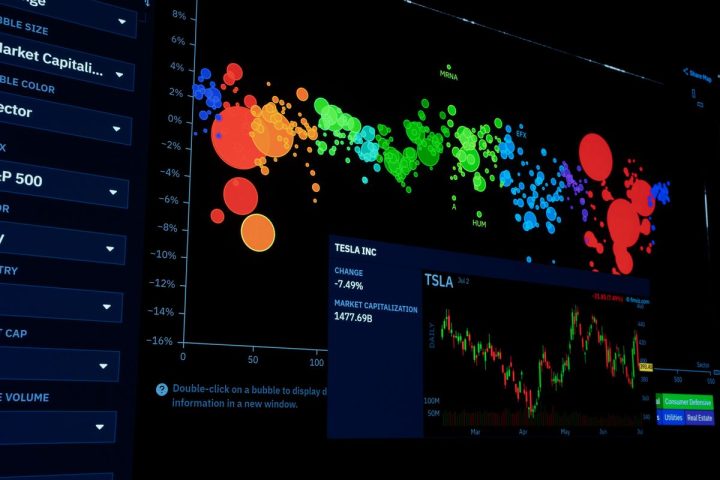

Markets never really sleep. Somewhere in the world, a stock exchange is open, and new information is landing on trading screens every second. That is the world of breaking financial news, and it shapes how millions of people invest, save, and plan for the future.
For traders, business owners, and everyday investors, keeping up with financial headlines is not just about knowing what happened. It is about understanding why it happened, how the market might react, and whether the story actually matters for the long run.
What Is Breaking Financial News?
Breaking financial news is fresh information that has the power to move markets. It usually needs quick attention because it can change how investors think about prices, risk, or the economy.
Common examples include:
- Surprise interest-rate decisions
- Major corporate announcements or mergers
- Earnings that beat or miss expectations
- Inflation and jobs reports
- Sudden market drops or rallies
- Sharp moves in oil, gold, or other commodities
- Big geopolitical events
Because reactions happen fast, this kind of news can shake up stocks, bonds, currencies, and commodities within minutes. That is exactly why so many people check financial news updates throughout the day.
Why Does Breaking Financial News Matter So Much?
Markets run on expectations. Investors buy and sell based on what they think will happen next. So, when new information arrives, those expectations can shift quickly.
For instance, if a company reports much stronger profits than analysts predicted, investors may grow more confident about its future. As a result, demand for its shares often rises. On the other hand, a warning about falling revenue can spark concern and pull the stock price down.
The same logic applies to the broader economy. Strong job numbers can influence interest-rate expectations, while weak growth data may raise fears about corporate profits. In short, breaking news constantly reshapes the market’s outlook.
Stock Market News: Reading Between the Headlines
Stock market updates are some of the most-watched financial headlines. Investors track major indexes like the Dow Jones, S&P 500, and Nasdaq to gauge overall market direction.
A rally often signals growing confidence. Meanwhile, a sharp sell-off can point to worries about the economy, valuations, interest rates, or global risks.
However, not every market move means the same thing. A short-term dip might just be profit-taking, whereas a longer downturn could reflect deeper problems. Therefore, understanding why the market moved is usually more valuable than simply noting whether it went up or down.
Corporate Earnings and Business Announcements
Earnings season is a major driver of financial market news. Public companies regularly share updates on revenue, profit, costs, and future outlook.
Investors pay close attention to whether a company beats or misses analyst forecasts. Additionally, forward-looking guidance often matters even more than the current quarter’s results, since it hints at what is coming next.
Other headline-worthy events include:
| Event Type | Possible Market Impact |
| New product launch | Can boost investor confidence |
| Executive leadership change | May create short-term uncertainty |
| Layoffs or restructuring | Often signals cost-cutting pressure |
| Mergers & acquisitions | Can shift stock prices for both companies |
Even so, a rising stock price doesn’t always tell the full story. Consequently, it’s wise to dig into the reason behind the move before making any investment decision.
Interest Rates and Central Banks
Few things move markets like central bank decisions. In the United States, the Federal Reserve plays a central role in shaping monetary policy and borrowing costs.
Interest rates touch nearly everything, mortgages, business loans, consumer credit, and even stock valuations. When investors expect rates to fall, growth-focused stocks often benefit. Conversely, when rates are expected to stay high, caution tends to creep back into the market.
Because of this ripple effect, central bank statements frequently trigger sharp volatility, especially when policymakers hint at future moves.
Inflation and Economic Data
Economic reports form another key pillar of breaking financial news. Inflation, unemployment, retail sales, and GDP figures all shape how investors view the road ahead.
Inflation deserves special attention. Persistent price increases can chip away at consumer spending power and push up business costs. In turn, this often influences central bank policy decisions.
Similarly, employment data offers a useful signal. A strong labor market usually supports consumer spending and economic growth, while a cooling job market can raise recession fears. As a result, most investors look at several indicators together rather than relying on a single report.
Currency and Commodity Markets
Breaking news also ripples through currency and commodity markets. Major currencies shift in response to interest-rate expectations, trade developments, and geopolitical tension.
Commodities matter just as much. Oil prices, for example, affect transportation costs, manufacturing, and household budgets. Gold, meanwhile, is often viewed as a safe haven during uncertain times, though its price still depends on supply, demand, currency strength, and interest rates.
Geopolitical Developments and Market Risk
International events can turn into major financial news almost overnight. Trade disputes, conflicts, elections, and sanctions can all increase uncertainty across global markets.
The scale of impact varies widely. Some events cause a quick spike in volatility and then fade from view. Others, however, can leave lasting effects on trade flows, energy prices, and long-term economic growth.
Technology and AI: The New Market Movers
Technology has become one of the most closely watched areas in financial market news. Artificial intelligence, semiconductors, cloud computing, and cybersecurity continue to draw heavy investor interest.
Companies are pouring massive amounts of money into AI infrastructure and software. Naturally, investors are watching closely to see whether this spending eventually turns into real, sustainable profit. At the same time, high expectations can create valuation risk, even an exciting technology story can struggle with competition, regulation, or slow profitability.
How Should Investors React to Breaking News?
One of the toughest parts of following markets is knowing when to act, and when to simply wait. Because markets can move so fast, emotional decisions often lead to costly mistakes.
Here’s a simple approach worth following:
- Verify the source before reacting, unverified claims spread fast, especially on social media.
- Ask if it changes the long-term picture a short-term headline rarely changes a company’s real value.
- Check your own risk tolerance and time horizon before adjusting your portfolio.
- Avoid knee-jerk trades based on a single headline.
Breaking News and Long-Term Investing
Ultimately, breaking financial news works best as one piece of a bigger investment strategy. Long-term investors usually focus on business fundamentals, earnings growth, cash flow, competitive strength, and fair valuation.
Daily headlines are useful, but they shouldn’t dictate every decision. Markets often swing on short-term noise that barely affects long-term returns. Investors who chase every headline frequently end up buying high and selling low, the opposite of a winning strategy.
Final Thoughts
Breaking financial news gives investors a real-time window into the forces shaping markets and the global economy, from earnings and interest rates to inflation, technology, and geopolitics.
Staying informed matters. However, reacting to every single headline is not the same as investing wisely. Instead, take time to verify information, weigh its real impact, and measure it against your long-term financial goals. In the end, breaking news tells you what just happened. Thoughtful analysis tells you why it matters. Combining timely updates with research, diversification, and patience is still the smartest way to navigate today’s fast-moving financial world.