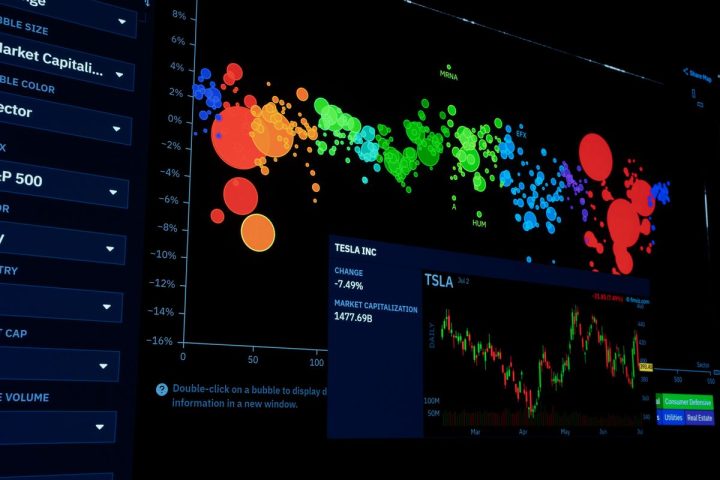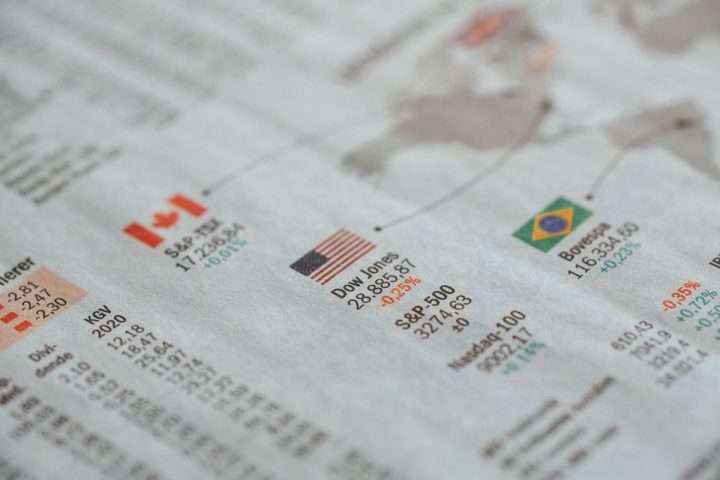

Market volatility news is everywhere these days, and for good reason. Stock prices, bond yields, and currencies are moving faster than many investors expect. As a result, people want to understand why. In short, market volatility means how quickly and how much an asset’s price changes over time. Some ups and downs are normal. However, sudden, sharp swings can leave everyday investors feeling uneasy.
Markets react to fresh information constantly. For instance, jobs reports, inflation data, interest-rate decisions, and world events can all push prices around. Therefore, keeping an eye on market volatility news helps investors make sense of these changes instead of reacting out of fear.
What Does Market Volatility Actually Mean?
Simply put, volatility shows how much a price moves over a set time. A stable market has small, steady price changes. Meanwhile, a volatile market swings sharply, sometimes within hours.
Volatility can hit individual stocks, whole sectors, currencies, or even the bond market. Interestingly, it isn’t always a bad sign. Prices can swing wildly during a strong rally, too, not just during a crash.
So, the real question isn’t whether volatility exists. Instead, investors should ask: what’s causing it, and will it last?
Economic Reports Often Spark Market Swings
Economic data is one of the biggest volatility triggers. Investors track inflation, jobs numbers, consumer spending, and factory output closely.
For example, if inflation comes in hotter than expected, investors may worry that interest rates will stay high longer. As a result, stocks often dip while bond yields climb. On the other hand, cooling inflation can boost hopes for rate cuts, which often lifts stock prices.
In other words, economic data matters not just for today’s economy but for what it signals about tomorrow’s policy.
The Federal Reserve’s Powerful Influence
Few institutions move markets like the Federal Reserve. Its interest-rate decisions ripple through stocks, bonds, and currencies alike.
Higher rates raise borrowing costs for businesses and households. Consequently, this can shrink how much investors are willing to pay for future company profits. Lower rates, meanwhile, can ease financial pressure, though context matters. A rate cut meant to rescue a weakening economy sends a very different signal than one made simply because inflation has cooled.
That’s why investors watch not just Fed decisions, but also every word from Fed officials.
Corporate Earnings Move Markets Fast
Earnings season brings its own wave of volatility. When companies report results, investors compare them against analyst forecasts and future guidance.
A disappointing earnings report can send a stock tumbling. Conversely, strong results especially from a company investors doubted can spark a sharp rally. Because large tech, finance, and healthcare firms carry heavy weight in major indexes, their earnings can shake the broader market too.
Geopolitical Events Add Uncertainty
Global conflicts, trade tensions, elections, and sanctions all fuel market volatility news headlines. These events often shake investor confidence and disrupt supply chains.
Energy prices, in particular, react quickly to geopolitical shifts. When uncertainty rises, investors often shift toward safer assets. However, as more details emerge, market reactions can shift again just as fast.
Bonds Move the Market Too
Volatility isn’t limited to stocks. U.S. Treasury yields influence borrowing costs and stock valuations across the economy.
When yields spike suddenly, stocks often face pressure since bonds start looking more attractive by comparison. Falling yields, meanwhile, can support stock prices especially when investors expect looser monetary policy ahead.
Tech Stocks and AI: A Volatility Hotspot
Growth-focused tech stocks are especially sensitive to rate expectations, since their value depends heavily on future earnings. Additionally, the rise of artificial intelligence has added a fresh layer of excitement and risk. Optimism around AI can drive rapid rallies, while valuation concerns can trigger equally fast pullbacks.
Investor Psychology Fuels the Swings
Markets aren’t just numbers they’re driven by human emotion. Fear and greed both play a role. When confidence rises, buying often snowballs into a rally. When fear takes over, panic selling can spiral quickly.
Social media and 24/7 news coverage tend to amplify these reactions. As a result, markets sometimes swing more than the actual news justifies.
Understanding the VIX (“Fear Index”)
The Cboe Volatility Index (VIX) is a well-known gauge of expected market turbulence. Often called the market’s “fear gauge,” it tracks expected volatility in S&P 500 options.
That said, the VIX doesn’t predict direction, only the size of expected moves. Smart investors use it alongside other tools, not as a standalone signal.
Turning Volatility Into Opportunity
Although volatility raises risk, it can also open doors. Price dips sometimes let long-term investors buy quality stocks at a discount.
However, not every dip is a bargain. If a company’s fundamentals are weakening, prices may keep falling. A disciplined investor checks earnings, balance sheets, and industry trends rather than chasing every headline.
Simple Ways to Manage Market Volatility
| Strategy | Why It Helps |
| Diversification | Spreads risk across sectors and assets |
| Long-term focus | Reduces reaction to short-term noise |
| Risk assessment | Matches investments to your comfort level |
| Regular review | Keeps your portfolio aligned with goals |
What to Watch in Market Volatility News?
- Federal Reserve rate decisions
- Inflation and jobs reports
- Corporate earnings season
- Treasury yield movements
- Oil and commodity prices
- Global political developments
- VIX and other volatility indicators
Final Thoughts
Volatility is simply part of investing, not a sign that something’s broken. Even strong, healthy companies see sharp price swings sometimes. Rather than chasing every headline, successful investors focus on understanding why prices move.
Ultimately, market volatility news offers useful context, not a crystal ball. By tracking economic data, Fed policy, and corporate fundamentals, investors can stay informed and calm no matter which way the market swings next.