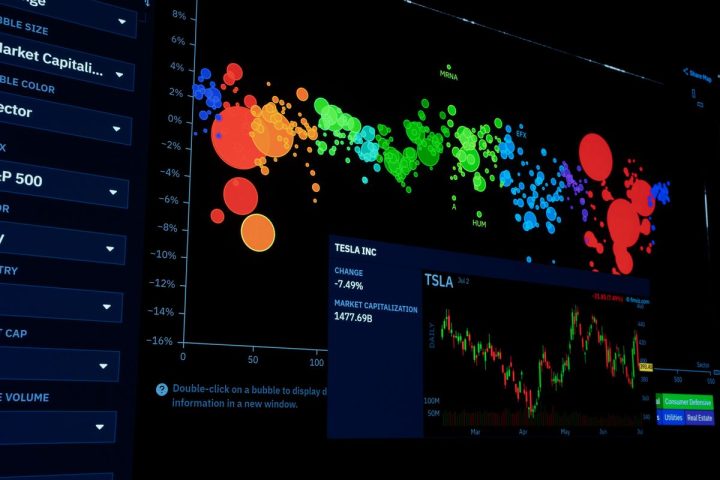

A reliable stock market forecast helps investors understand what might shape stock prices in the months ahead. Analysts, traders, and everyday investors all rely on forecasts to spot opportunities and avoid risks. No forecast is ever 100% accurate. However, studying economic conditions, interest rates, company earnings, and investor mood can still offer real value.
Markets move because of many connected forces. For instance, a surprise inflation report, a sudden rate decision, or a strong earnings season can shift investor expectations overnight. Because of this, a smart stock market forecast never relies on just one signal. Instead, it looks at the bigger picture.
What Is a Stock Market Forecast?
A stock market forecast tries to estimate where stock prices could head over a certain period. It might focus on a single company, a sector, or a major index like the S&P 500, Nasdaq, or Dow Jones.
Analysts often study sectors such as technology, healthcare, energy, and financial services. Meanwhile, some forecasts look weeks ahead. Others plan for years. Short-term views usually track earnings and economic data. Long-term views, on the other hand, focus on growth, innovation, and valuation.
Economic Growth and the Stock Market
Economic growth plays a huge role in any stock market forecast. When the economy expands, businesses typically see stronger demand. As a result, revenue and profits often rise, which can push stock prices higher.
Experts track growth through GDP, consumer spending, and business investment. Still, fast growth isn’t always good news. If the economy overheats, inflation can spike. Consequently, central banks may raise interest rates to cool things down, putting pressure on stock valuations.
Interest Rates and Federal Reserve Policy
Interest rates remain one of the most watched factors in the market. In the U.S., investors closely follow the Federal Reserve’s policy decisions.
Higher rates raise borrowing costs for both businesses and consumers. They also change how investors value future company profits. Growth stocks, especially tech companies, tend to be more sensitive to rate hikes.
On the other hand, lower rates make borrowing cheaper. They can also make stocks look more attractive compared to bonds and savings accounts. Because of this back-and-forth, rate expectations can shift a stock market forecast almost instantly.
Inflation Trends to Watch
Inflation is another key piece of the puzzle. Mild inflation usually signals a healthy economy. However, persistent high inflation can strain households and businesses alike.
Rising costs for wages, materials, and energy can squeeze company profit margins. Businesses may try to pass these costs to customers, but competition often limits that option.
Therefore, investors watch inflation reports closely. Cooling inflation tends to boost market optimism. Meanwhile, unexpected inflation spikes usually trigger caution.
Corporate Earnings: The Real Growth Driver
At the end of the day, corporate earnings drive long-term stock performance. Companies must generate steady profit to justify their valuations.
During earnings season, analysts examine:
- Revenue growth
- Earnings per share (EPS)
- Profit margins
- Cash flow
- Management guidance
Companies that beat expectations often see their stock prices climb. In contrast, disappointing results can trigger heavy selling.
Different sectors respond differently too. Tech firms often rely on AI, cloud computing, and software growth. Energy companies, meanwhile, react more to commodity prices. Banks and financial firms respond closely to interest rate changes.
Artificial Intelligence and Tech Stocks
AI remains one of the biggest themes shaping today’s stock market forecast. Chipmakers, cloud providers, and software companies have all drawn massive investor interest.
Investors are now watching whether AI spending will actually translate into real profit. Companies that successfully use AI could see strong, sustained growth. Meanwhile, businesses that fail to adapt may fall behind.
That said, high expectations bring real risk. If a company’s growth falls short of investor hopes, its stock can swing sharply.
Market Valuations: Are Stocks Too Expensive?
Valuation matters just as much as growth. A stock’s price should reflect its earnings, revenue, and future potential, not just hype.
Common valuation tools include:
| Metric | What It Measures |
| Price-to-Earnings (P/E) Ratio | Stock price vs. company earnings |
| Price-to-Sales (P/S) Ratio | Stock price vs. total revenue |
| Price-to-Book (P/B) Ratio | Stock price vs. company assets |
Markets can keep climbing even when valuations look high, especially if earnings keep growing. Still, expensive stocks are more vulnerable to disappointment. So, a solid stock market forecast weighs both earnings potential and current price levels.
Investor Sentiment and Market Psychology
Short-term market moves often come down to emotion. When investors feel optimistic, they buy more freely and accept higher prices. During fearful periods, they tend to sell and move toward safer assets.
News events, social media chatter, and political developments can all shift sentiment quickly. Because sentiment changes so fast, it’s a poor standalone forecasting tool. Long-term investors, therefore, usually focus more on fundamentals than daily mood swings.
Global Economic Conditions
Markets don’t operate in isolation. Developments in Europe, Asia, and emerging markets can ripple through global markets, including the U.S.
Trade policy, tariffs, currency shifts, and energy prices all matter here. Multinational companies, in particular, feel the effects of a stronger or weaker U.S. dollar since it changes how much their overseas revenue is worth at home.
For this reason, a complete stock market forecast always factors in international conditions, not just domestic ones.
Sector Rotation Explained
Not every sector performs the same way at the same time. During strong economic periods, cyclical sectors like industrials and consumer discretionary often lead. During uncertain times, investors typically shift toward defensive sectors like healthcare and utilities.
Interest rate changes can also trigger sector rotation. As a result, tracking which sectors are gaining strength can reveal where market momentum is building next.
Risks That Could Change the Forecast
Every forecast carries uncertainty. Unexpected events can reshape the market overnight. Common risks include:
- Higher-than-expected inflation
- Sudden interest rate changes
- Economic recession
- Geopolitical conflicts
- Earnings disappointments
- Supply chain disruptions
- New regulations
Because no forecast can account for everything, it’s best treated as a scenario, not a guarantee. Diversification and smart risk management remain essential tools for handling this uncertainty.
Short-Term vs. Long-Term Forecasts
What Short-Term Forecasts Focus On?
Short-term forecasts usually track momentum, technical signals, upcoming earnings, and economic data releases. They tend to shift quickly based on fresh news.
What Long-Term Forecasts Focus On?
Long-term forecasts, however, look at bigger themes like economic growth, innovation, demographics, and valuation trends. As a result, a market can dip short-term while still holding a positive long-term outlook.
How Investors Can Use a Stock Market Forecast?
Rather than trying to predict an exact price on an exact day, investors can use forecasts to weigh different possible outcomes.
For example:
- Positive scenario: Cooling inflation, steady growth, strong earnings, supportive Fed policy
- Challenging scenario: Persistent inflation, weak growth, rising unemployment, falling profits
Ultimately, investment decisions should align with personal goals, time horizon, and risk tolerance, not forecasts alone.
Final Thoughts on the Stock Market Forecast
A well-researched stock market forecast offers valuable perspective on what may drive markets forward. Growth, inflation, interest rates, earnings, valuations, and global events all play a role in shaping outcomes.
Still, forecasts are guides, not guarantees. Markets can change direction quickly when new information arrives. Therefore, the smartest approach combines forecasting with solid research, diversification, and a long-term mindset. By understanding why markets move, rather than only predicting where they’ll go, investors can make more confident, informed decisions no matter what the market brings next.