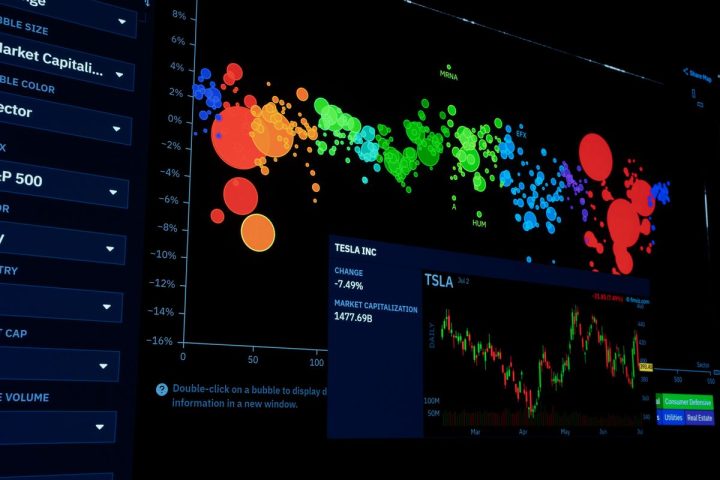

Stock market analysis helps everyday investors make sense of a confusing world of numbers, news, and price swings. Whether you are just starting out or you already manage a full portfolio, learning how to study stocks properly can lower stress and lead to better choices. In this guide, we break down the key methods, tools, and habits that make stock market analysis easier to understand, even if you are completely new to investing.
What Is Stock Market Analysis?
In simple terms, stock market analysis means studying a company, its industry, and the wider economy before you buy or sell a stock. It looks at things like company earnings, interest rates, inflation, and even how other investors feel about the market.
Because so many factors shape stock prices, no single method tells the whole story. Instead, most successful investors combine several tools to build a fuller picture. As a result, they make decisions based on evidence, not guesswork or emotion.
The Three Core Methods of Stock Market Analysis
Most investors rely on three main approaches. Each one looks at the market from a different angle, so together they give a more balanced view.
Fundamental Analysis: Studying the Business
Fundamental analysis looks at a company’s financial health. This includes revenue, profit margins, debt, and cash flow. In addition, investors study the company’s leadership, its competitors, and how well it fits into current industry trends.
For instance, a business with steady sales growth and low debt usually looks stronger than a company that is losing money and borrowing heavily. However, a strong company is not always a good buy, the price you pay still matters.
Technical Analysis: Reading the Charts
Technical analysis, on the other hand, focuses on price charts and trading volume rather than company finances. Traders use tools like moving averages and the Relative Strength Index (RSI) to spot trends and possible turning points.
This method works well for short-term traders. Still, past price patterns do not guarantee future results, so it should never be used alone.
Sentiment Analysis: Measuring Market Mood
Finally, sentiment analysis looks at how investors feel about a stock or the market as a whole. Fear and excitement often move prices just as much as facts do. Therefore, understanding market mood can help you avoid buying at the peak of hype or selling during a panic.
Key Financial Ratios Every Investor Should Know
Financial ratios make it easier to compare companies side by side. Below is a quick reference table.
| Ratio | What It Shows |
| P/E Ratio | How much investors pay for each dollar of earnings |
| P/S Ratio | Company value compared to total revenue |
| Debt-to-Equity | How much debt a company carries versus shareholder equity |
| Return on Equity | How efficiently a company uses shareholder money |
Meanwhile, remember that no ratio should be judged alone. Always compare it with the company’s history and its competitors for a fair result.
How Interest Rates and Inflation Shape Stock Prices?
Interest rates are one of the biggest forces behind stock market analysis. When rates rise, borrowing becomes expensive, and this often slows down both business spending and consumer demand. Consequently, stocks can become less attractive compared to bonds.
On the other hand, when rates fall, companies can borrow and grow more easily, which often boosts stock prices.
Inflation plays a similar role. Moderate inflation is normal, but rapid price increases raise costs for businesses. Whether a company can pass these costs on to customers often decides how well its stock performs.
Why Corporate Earnings Move the Market?
Earnings season can shake up stock prices fast. Investors do not just look at the numbers, they also compare results with expectations. For example, a company might post strong profits but still see its stock fall if investors hoped for more.
Because of this, smart stock market analysis focuses on future guidance as much as past performance.
Global Events, AI, and Technology Stocks
Global news also plays a role in stock market analysis. Trade policies, elections, supply chain issues, and currency shifts can all move prices, even for companies that operate mainly at home.
Meanwhile, artificial intelligence, semiconductors, and cloud computing are reshaping entire sectors. Many investors are excited about these industries. Still, it is wise to separate real business growth from short-term hype, since overpriced stocks can fall hard if results disappoint.
Managing Risk With Diversification and Discipline
Even the best research cannot remove all risk from investing. That said, you can manage it through diversification, spreading your money across different companies, sectors, and asset types.
Emotional discipline matters too. Fear often pushes people to sell during downturns, while greed pushes them to buy after prices have already jumped. Instead, setting clear rules for buying and selling ahead of time can help you stay calm during volatile periods.
Final Thoughts: Making Stock Market Analysis Work for You
To sum up, stock market analysis works best when you combine several tools, company fundamentals, price trends, market sentiment, and economic data. No method can predict the future with certainty. However, a balanced, disciplined approach gives you a real edge over guessing or following the crowd. Start small, stay consistent, and let steady stock market analysis guide your long-term investing decisions.
Keywords: stock market analysis
Description: Learn stock market analysis the easy way, fundamentals, technicals, risk, and trends explained simply. Start investing smarter today!